Dying Light: The Beast
Kyle Crane is back, and this time the experiments done to him are the whole point of the game. Dying Light: The Beast is Techland's fifth entry in the series, developed and published in-house and released as a standalone title on September 18, 2025 for PC, PlayStation 5, and Xbox Series X/S (PS4 and Xbox One ports are still being finished). What started life as a DLC pack for Dying Light 2 grew into its own full game, and that origin story actually explains a lot about why it feels tighter and more focused than its predecessor.
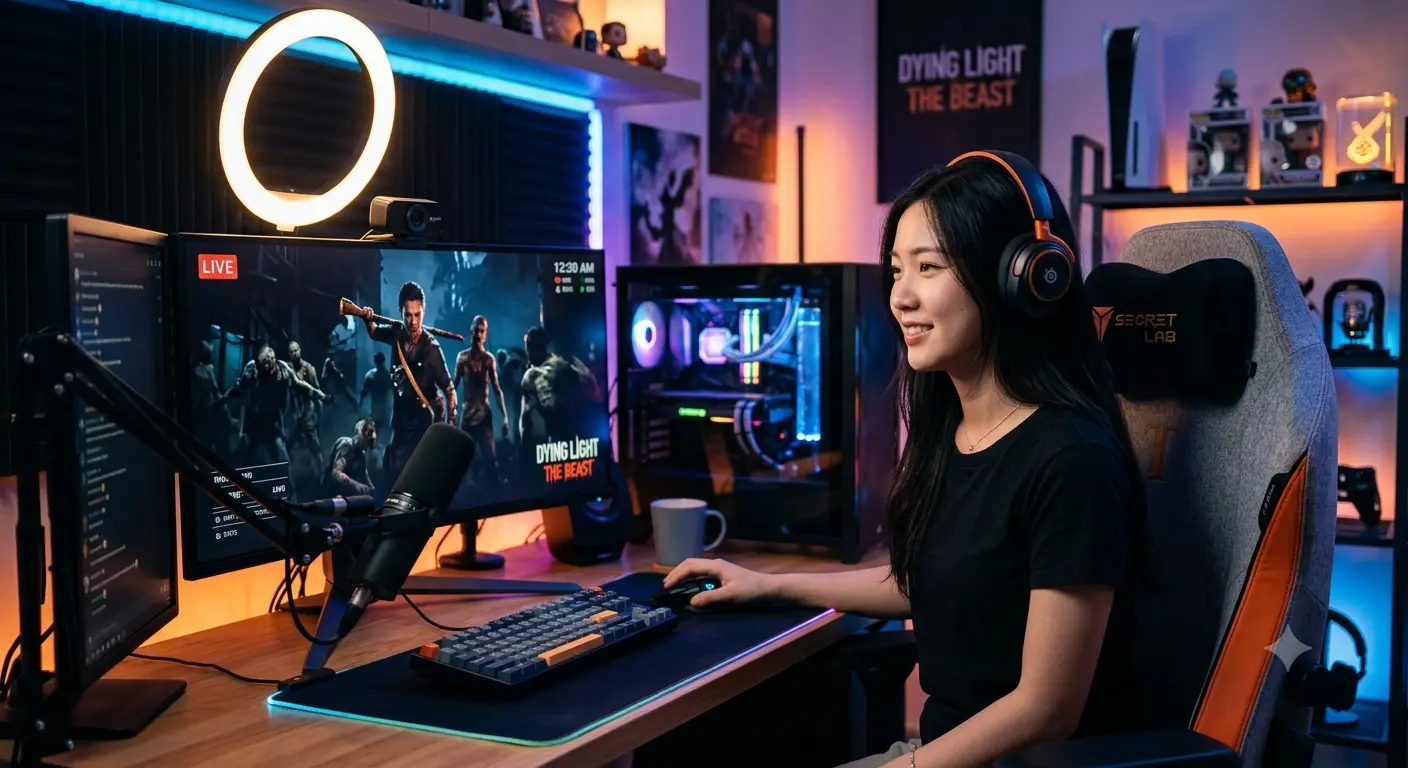
Kyle Crane is back, and this time the experiments done to him are the whole point of the game. Dying Light: The Beast is Techland's fifth entry in the series, developed and published in-house and released as a standalone title on September 18, 2025 for PC, PlayStation 5, and Xbox Series X/S (PS4 and Xbox One ports are still being finished). What started life as a DLC pack for Dying Light 2 grew into its own full game, and that origin story actually explains a lot about why it feels tighter and more focused than its predecessor.
The pitch is simple: after a decade hiding from the people who created him, Crane gets captured by a man known only as the Baron and spends thirteen years as a human guinea pig. He escapes with volatile DNA mixed into his own, lands in the fictional Swiss valley of Castor Woods, and sets out for revenge. If you liked the original Dying Light's slower, scarier pace more than the bigger, busier Dying Light 2, this is the game built for you. Newcomers can jump in too, since the story stands on its own, but fans of the franchise will get the most
About the Game
Castor Woods isn't another zombie-infested city, which is the first thing that sets The Beast apart. Techland traded Harran and Villedor for a forested Alpine valley described internally as inspired by Twin Peaks, and it shows in the smaller towns, mining outposts, and dense woodland that make up the map. It's noticeably more compact than Villedor in Dying Light 2, but the team leaned into density over scale.
The story picks up well after the events of The Following. Crane, transformed by the Mother into something between human and volatile, spent years evading the Global Relief Effort before a man named Marius Fischer — known as the Baron — captured and experimented on him. After breaking free with help from a fellow captive, Olivia, Crane discovers the price of those experiments: he can tap into a beast-like state, at the cost of fighting for control over it. The plot eventually loops in exiles with telepathic abilities, a faction running the local Town Hall, and a creature called the Beast who turns out to be a familiar face from Dying Light 2.
What actually separates this game from the rest of the genre is how it splits Crane's combat identity in two. You're either playing the careful survivor with guns and crafted weapons, or you're cutting loose in Beast Mode and ripping enemies apart with raw strength. Few zombie games let you toggle between a stealthy human and a rage-fueled monster on demand, and it's the mechanical hook the whole game is built around.
Gameplay
You start the game with Crane's parkour already partly upgraded, which is a deliberate choice — Techland wanted players moving fluidly from hour one instead of grinding back to the skill level they had in earlier games. Wall runs, pole vaults, and bar swings are available almost immediately, and further skill points unlock dropkicks, charges, and smash attacks as you progress.
The core loop hasn't changed much from the rest of the series: scavenge and explore during the day, then deal with much more aggressive infected once night falls. What's different is the survival pressure. Weapons degrade with use, vehicles take damage and need repairs, and resources are scarcer than in Dying Light 2's more generous economy. A 4x4 vehicle gives you a faster, if noisier, way to cover ground when the terrain doesn't suit parkour — which, in a wooded valley instead of a city, happens more often than longtime fans might expect.
Mission structure follows the usual mix of main story quests and side content, with boss-style Chimera fights as the major combat set pieces. Difficulty is adjustable, and on harder settings the bosses put up more of a fight than some player reviews suggest, though a few critics did note that once you understand a boss's pattern, repeat attempts go down fast. At an estimated 20 hours for the main story and 40 to 60 for full completion, replayability sits in line with the rest of the franchise, helped along by a 2026 "Restored Land" content update that lets players permanently clear zones of infected for the first time in the series.
Main Features
Open World — Castor Woods trades the urban sprawl of Villedor for a forested valley with small settlements, mines, and tourist landmarks, all built around vertical traversal even without city skylines to climb.
Beast Mode — Crane's volatile-infused abilities let him switch from a grounded survivor to a brutal, high-damage state on demand. It's the headline mechanic, and reviewers consistently call it one of the best parts of the game.
Co-op Multiplayer — Bring a friend along for the campaign. It's not built as a competitive PvP experience; the multiplayer here is squarely about surviving together.
Vehicles — A 4x4 off-roader handles the gaps that parkour can't, useful for crossing the more rural stretches of the map quickly, though it degrades with collisions and rough use.
Weapon and Gear Degradation — Melee weapons and firearms wear down, pushing you to keep adapting your loadout rather than relying on one favorite weapon for the whole game.
Day/Night Cycle — The series' signature system returns. Daytime infected are slow and largely passive; nighttime turns the map into a much more dangerous chase, with limited safe options once the sun goes down.
Chimeras and Boss Fights — Mutated enemies sent by the Baron act as the game's major combat encounters, requiring different tactics than standard infected.
Exiles and Telepathy — A faction of escaped test subjects with psychic abilities ties into the late-game story and lets you eventually exert some control over enemy Chimeras.
Graphics and Audio
Built on an evolved version of Techland's C-Engine, The Beast leans on the studio's experience optimizing Dying Light 2 for current-gen hardware. Lighting and texture work hold up well in screenshots and footage, particularly in foliage-dense areas, and the gore and dismemberment system is detailed enough that several reviewers singled it out specifically. Ray-traced lighting and reflections are supported on PC, alongside upscaling options for both Nvidia and AMD hardware.
On the audio side, returning composer Olivier Deriviere (who also scored Dying Light 2) handles the soundtrack rather than the original game's composer, which is worth knowing if you're attached to that earlier sound. Voice acting gets consistent praise, with Roger Craig Smith reprising Crane and delivering a performance critics describe as carrying the game through its more predictable story beats.
Performance
PC performance reports from launch were broadly stable, with most outlets noting solid frame rates on mid-range hardware at 1080p and good scaling up to 4K on higher-end cards with DLSS or FSR enabled. Some user reviews on PS5 reported bugs at launch, which is common for an open-world release of this size, and Techland has continued patching the game well past release. Load times are short thanks to SSD-based streaming, though an SSD isn't optional — it's required to run the game at all.
There's no mobile version of Dying Light: The Beast, so battery, heating, and RAM-usage concerns that apply to mobile games don't come into play here. This is a PC and console release only.
Pros
- Beast Mode genuinely changes how combat feels and is the standout new mechanic
- Tightest, most focused map the series has had since the original game
- Strong gore and combat feedback, with parkour that critics rate as the series' best
- Roger Craig Smith's performance as Crane carries the story
- Co-op support for playing the campaign with a friend
- Multiple critics and outlets call it the highest-rated Dying Light to date
Cons
- Castor Woods' rural layout offers fewer parkour opportunities than the cities in earlier games, leading to more straightforward travel
- Story is serviceable rather than ambitious — it won't surprise longtime franchise fans
- Some players reported bugs and clunky controls, especially around the grappling hook
- A portion of the community found bosses too easy on default difficulty
- Side content quality varies, with some quests feeling repetitive over a full playthrough
System Requirements
Minimum (1080p, lower settings)
- OS: Windows 10 64-bit
- CPU: Intel Core i5-13400F / AMD Ryzen 7 5800F
- GPU: NVIDIA GeForce GTX 1060 / AMD Radeon RX 5500 XT / Intel Arc A750
- RAM: 16 GB
- Storage: 70 GB (SSD required)
Recommended (1440p, higher settings)
- OS: Windows 10/11 64-bit
- CPU: Intel Core i5-13400F / AMD Ryzen 7 7700
- GPU: NVIDIA GeForce RTX 3070 Ti / AMD Radeon RX 6750 XT / Intel Arc B580
- RAM: 16 GB
- Storage: 70 GB (SSD required)
Console storage is smaller: roughly 39 GB on PS5 and 50 GB on Xbox Series X/S. Specs above reflect the official Steam listing; always check the store page for your platform before buying, since requirements get revised after major patches.
Beginner Tips
- Don't rush into Beast Mode the moment it unlocks — early on, the meter is limited and you'll want it saved for tougher fights or Chimera encounters.
- Keep at least one backup melee weapon and firearm on hand, since gear degradation will leave you stranded mid-fight if you only carry one of each.
- Use the vehicle for long-distance travel between objectives rather than forcing parkour through Castor Woods' less traversal-friendly terrain.
- Loot during the day and bank your safehouse locations early — night encounters are much harder to walk into unprepared.
- If you're coming straight from Dying Light 2, expect a slower, scarcer survival loop. Adjust your playstyle instead of treating this as a direct continuation.
Frequently Asked Questions
Is Dying Light: The Beast a sequel to Dying Light 2? Not directly. It follows Kyle Crane from the original Dying Light and The Following, though it does connect to Dying Light 2's story by the end.
Do I need to have played the earlier games first? No. Techland built it to work as an entry point, though returning fans will catch more references and emotional payoff.
Is there multiplayer? Yes, co-op campaign support is included, though it's not built around competitive PvP.
What's the Metacritic and OpenCritic score? The game launched around 78 on Metacritic and 82–83 on OpenCritic, making it the highest-rated mainline entry in the series so far.
Is it available on mobile? No, it's a PC and console release only (PC, PS5, Xbox Series X/S, with PS4/Xbox One support in progress).
How long does it take to finish? Around 20 hours for the main story, and 40–60 hours if you're chasing full completion.
Final Verdict
Dying Light: The Beast doesn't try to reinvent the series — it goes back and fixes what didn't land in Dying Light 2, then leans hard into the one mechanic that's genuinely new: switching between a careful survivor and an unleashed monster. The smaller, denser map works against it occasionally, since fewer rooftops mean less of the parkour the series is known for, but the trade-off is a tighter, more atmospheric world that critics and players have responded to far better than Dying Light 2's sprawl. If you've been waiting for Techland to recapture what made the first game tense and scary, this is the closest they've come. If you're brand new to the series, it's also a reasonable place to start.