Escape from Tarkov Is It Worth Playing?
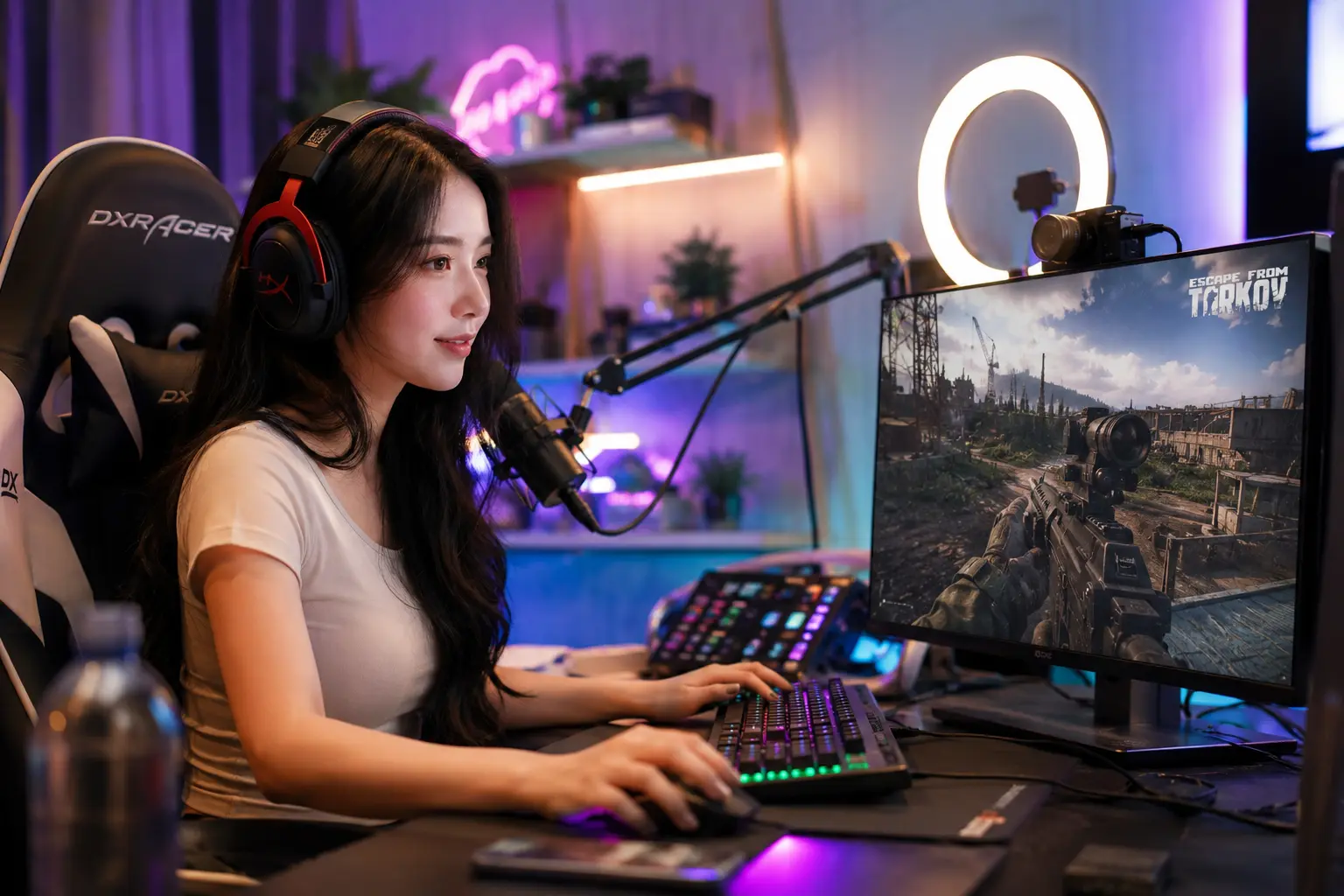
Escape from Tarkov (EFT) is a hardcore extraction FPS developed and published by Russian studio Battlestate Games. After nearly nine years in closed beta, the game officially launched its version 1.0 on November 15, 2025 — simultaneously on the BSG launcher and Steam. Set in the fictional post-Soviet city of Tarkov, the game drops players into a conflict zone controlled by rival PMCs, armed locals (Scavs), and dangerous AI bosses, with one objective: extract alive with your loot.
Escape from Tarkov (EFT) is a hardcore extraction FPS developed and published by Russian studio Battlestate Games. After nearly nine years in closed beta, the game officially launched its version 1.0 on November 15, 2025 — simultaneously on the BSG launcher and Steam. Set in the fictional post-Soviet city of Tarkov, the game drops players into a conflict zone controlled by rival PMCs, armed locals (Scavs), and dangerous AI bosses, with one objective: extract alive with your loot.
EFT is not a casual shooter. It targets players who want punishing, high-stakes gameplay where dying means losing every piece of gear you brought in. The audience is PC gamers comfortable with steep learning curves, deep tactical mechanics, and a grinding progression loop that rewards patience and map knowledge above reflexes alone.
ItemValueTitleEscape from TarkovDeveloperBattlestate GamesPublisherBattlestate GamesRelease DateNovember 15, 2025 (v1.0)GenreHardcore Extraction FPS / Tactical ShooterPlatformPC (Windows) — Steam & BSG LauncherPriceStarting from ~$49.99 (Standard Edition on Steam)MultiplayerYes (PvP raids) + PvE mode (co-op/solo)Official Websiteescapefromtarkov.com
About the Game
Tarkov is set in the Norvinsk region of northwestern Russia, a "special economic zone" that became a flashpoint for corporate corruption and armed conflict. Two PMC factions — USEC (American contractors) and BEAR (Russian operators) — are locked in a war neither side can win, while the city of Tarkov descends into lawless chaos. Your character is a PMC operative trapped behind a blockade, trying to survive long enough to escape.
The game's stated goal is to escape Tarkov — but that's a long-term objective unlocked through completing a massive story campaign introduced in version 1.0. Day-to-day, you enter matches called raids on various maps, loot gear and resources, complete trader quests, and try to reach an extraction point before time runs out. If you die, you lose almost everything you brought in.
What separates Tarkov from other extraction shooters is the sheer depth of its systems. Weapon customization runs into hundreds of attachment combinations per gun. Medical mechanics require treating individual wounds — fractures, bleeds, and contusions each need specific items. The economy is player-driven through traders with reputation levels (called loyalty levels) that unlock better gear and prices over time. The hideout — your in-game base — functions as a crafting station and passive income generator that grows as you upgrade it.
Since the 1.0 launch, Tarkov also introduced an actual story campaign with four different endings, which was absent throughout its entire beta period. This is a major content addition that gives both veterans and newcomers a structured reason to play through the game's maps in sequence.
Gameplay
How It Works
Each session drops you into a map (called a raid) with gear you've prepared in your stash. You navigate the location — looting buildings, killing Scavs, avoiding or engaging other player PMCs — and attempt to reach one of several extraction points before the raid timer expires. If you extract, you keep everything you found. If you die, you lose your loadout.
You can also play as a Scav — a separate character that spawns mid-raid with random gear, no karma risk to your main PMC, and its own cooldown timer. This is the low-stakes entry point for learning maps or recovering economy after bad runs.
Progression
Tarkov's progression is multi-layered. You level up your PMC through actions in raid (kills, looting, healing), unlock quests from traders like Prapor, Therapist, and Skier, and build your hideout module by module. Higher trader loyalty levels unlock better gear and barter trades. Skills like endurance, strength, and weapon mastery improve through use, adding passive stat bonuses over time.
Wipes — server-wide resets of all player progress — happen periodically, though with the 1.0 launch, BSG indicated wipes will become less frequent than during beta.
Objective & Difficulty
There are no hand-holding tutorials. New players are expected to learn from death, community resources, and experimentation. Combat is fast and lethal — a single headshot or burst of high-penetration ammo can end a raid in seconds. Time-to-kill varies widely depending on ammo type, armor class, and hit location. The absence of kill cams means you rarely know exactly what happened when you die.
PvE Mode
A PvE co-op mode was added in mid-2024 (controversial at launch due to its paywall) and received major updates at 1.0 launch. It allows solo or group play against AI opponents only, making it more accessible for players unwilling to compete in high-stakes PvP.
Replayability
High. No two raids play out the same way — random Scav spawns, player behavior, loot variations, extraction availability, and weather conditions ensure constant variance. The quest system alone provides 300+ objectives across multiple traders, keeping players engaged for hundreds of hours.
Main Features
Extraction Shooter Loop
The core risk-reward mechanic: bring gear in, extract alive to keep it, or lose everything. This creates tension that most other shooters can't replicate. Every raid is a calculated gamble.
Weapon Customization
Over 1,000 weapon attachments — scopes, suppressors, grips, stocks, handguards, muzzle devices — spread across 70+ base weapons. Each part affects handling, recoil, accuracy, noise signature, and ergonomics. Version 1.0 added further customization depth including the Škorpion Vz. 61 and expanded mod trees.
Realistic Ballistics
Penetration values, armor damage, and ricochet mechanics are calculated per round, per armor zone, per hit. The ammo you choose matters as much as the gun you carry.
PvP and PvE Raids
Choose between full PvP (competing against real players and AI), or PvE mode (AI only, co-op supported). Both share the same maps and quest systems.
Hideout
A personal base you upgrade between raids. Modules include a workbench (weapon crafting), medstation, nutrition unit, generator, bitcoin farm, and more. Crafting produces consumables, gear, and tradeable items. Upgrading the hideout is both a time and resource investment tied directly to in-raid performance.
Trader System
Seven main traders, each with specialty stock and loyalty tiers (Level 1–4). Higher levels unlock better prices and exclusive gear. Reputation with each trader is tied to completing their specific quest lines.
Maps and Environments
Multiple large maps — Factory (small, close-quarters), Customs (mid-size, mixed), Woods (open terrain, long range), Interchange (large indoor mall), Reserve, Shoreline, Streets of Tarkov (urban, demanding), Ground Zero (beginner-focused), and the new Terminal map added in 1.0 (endgame questline location).
Story Campaign (New in 1.0)
For the first time in the game's history, Tarkov has a structured narrative campaign with cinematics, four distinct endings, and a logical progression through maps. Only a small percentage of players are expected to unlock the "best" ending.
Scav Mode
Play as a randomly-equipped AI-controlled looter character with no stakes tied to your main account. Scav players can earn gear to transfer to their PMC stash on successful extraction.
Insurance System
Gear sent to insurance before a raid can be recovered if other players don't extract it. Items with expiring insurance now glow in the stash UI (added in a 2025 QoL patch) so you don't accidentally miss reclaims.
Graphics and Audio
Art Style
Escape from Tarkov goes for hyper-realistic military aesthetics. Environments are modeled after real post-Soviet urban and industrial spaces — rusted factories, overgrown forests, brutalist apartment blocks, industrial ports. The visual tone is dark and desaturated, reinforcing the sense of a city in collapse.
Textures and Animation
Weapon animations are a standout: every firearm has fully modeled reload, malfunction, and inspection sequences. Character movement feels weighted and deliberate rather than arcade-smooth. Textures are high-detail in most areas, though map-to-map quality consistency has historically varied.
Lighting
Dynamic lighting is one of Tarkov's strongest visual features. Indoor environments simulate light bounce realistically, flashlights are genuinely blinding at close range, and outdoor lighting based on time of day creates tactical implications — facing into the sun reduces visibility significantly.
Sound
Audio is arguably Tarkov's best asset. Directional sound design is precise enough that experienced players can identify enemy direction, distance, and movement type by ear alone. Footstep sounds differ by surface. Gunshots have distinct sonic signatures by caliber and suppressor use. Version 1.0 introduced a reworked audio propagation system and improved ambient occlusion for more accurate sound behavior around structures.
Music
Minimal in-game music during raids. The game relies on ambient sound and environmental audio to build tension rather than a traditional score. Menu music carries a somber, cinematic tone.
Performance
FPS and Optimization
Tarkov has a long-standing reputation for uneven optimization. The game runs on Unity engine, and performance varies significantly by map. Factory and Customs are playable on mid-range hardware; Streets of Tarkov — the largest urban map — has historically been demanding even on high-end rigs. Even a GTX 3070 Ti has struggled on Streets at maximum settings.
The 1.0 launch included optimization patches for Shoreline, Ground Zero, and Interchange. May 2025 patches improved Lighthouse performance. Reserve optimizations were part of a June 2025 update. Progress is consistent but incremental.
RAM Usage
This is Tarkov's most consistent hardware bottleneck. 16GB is the listed minimum, but 32GB is the practical recommendation for stable performance and faster raid loading. 64GB is listed as the Steam recommended spec, which surprised much of the community.
Anti-Cheat
Cheating has been a persistent problem throughout beta. Battlestate cited anti-cheat improvements as a priority for the 1.0 release. Community reports suggest cheater frequency has declined post-launch, though the issue remains present to some degree.
Loading Times
SSD is effectively mandatory. Mechanical hard drives produce loading times that can disconnect players from raids before they even spawn. The official Steam recommended specs explicitly require SSD.
Bugs
The game launched 1.0 with a wave of negative Steam reviews citing bugs and server instability. Battlestate released multiple stability patches in the weeks following launch, addressing crash frequencies and visual glitches. The situation has improved, but it's not a polished launch experience.
Pros
- Unmatched tension and risk-reward loop in the extraction genre
- Exceptional weapon customization depth — among the most detailed in any shooter
- Realistic audio design that rewards tactical listening
- Story campaign (new in 1.0) adds narrative structure for the first time
- PvE mode makes the game accessible to players who don't want PvP
- Deep progression and economy systems with hundreds of hours of content
- Active development with consistent patch cadence
Cons
- Brutal learning curve with minimal in-game tutorial
- Uneven performance, especially on demanding maps like Streets of Tarkov
- Cheaters remain a problem despite anti-cheat improvements
- High RAM requirement (32GB+ recommended in practice) limits accessibility
- Steam launch was rough — server instability and bugs in early weeks
- Existing BSG launcher owners must purchase again on Steam (not a free upgrade)
- PvE mode was controversial at launch due to paywall structure
System Requirements
Minimum
ComponentSpecOSWindows 10 (64-bit)CPUIntel Core i3-4150 / AMD Phenom II X4 955GPUNVIDIA GeForce GTX 1660 / AMD equivalentRAM16 GBStorage40 GB SSDDirectXDirectX 11
Recommended
ComponentSpecOSWindows 10/11 (64-bit)CPUIntel Core i7-8700K / AMD Ryzen 5 3600GPUNVIDIA GeForce RTX 4070RAM64 GBStorage40 GB SSD (NVMe preferred)DirectXDirectX 11
Practical note: The gap between minimum and recommended specs on Steam is unusually large. In practice, most players report stable performance with 32 GB RAM and a mid-range GPU like an RTX 3060 or equivalent on most maps. Streets of Tarkov remains the exception — it demands more than most hardware configurations deliver smoothly.
Beginner Tips
- Don't bring your best gear on day one. Learn maps using budget loadouts. Losing a pistol and a backpack is recoverable. Losing a kitted assault rifle is a serious setback.
- Play Scav runs to learn maps for free. Scav cooldown starts at 20 minutes and decreases as you level up the Scav case in the hideout. Use this time to study extraction points and building layouts.
- Prioritize completing Prapor and Therapist quests early. Both traders unlock critical consumables and gear at higher loyalty tiers. Quest items should be kept in a separate container — don't sell them.
- The hideout is not optional. Build the generator and water collector early. Without them, you can't run essential modules. The stash expansion is also high priority to avoid constantly reorganizing gear.
- Learn ammo before anything else. Ammo penetration values determine whether your shots defeat armor. A gun that fires low-penetration rounds will lose to an armored opponent. Check the ammo tier lists from community resources like the Tarkov Wiki.
- Use the Fence trader for early insurance. Even cheap insurance on your gun can return it if another player doesn't extract with it. Free gear is always better than buying new.
Frequently Asked Questions
Is Escape from Tarkov multiplayer?
Yes. Standard raids include both player PMCs and AI enemies. You'll encounter real players on most maps in PvP mode. A dedicated PvE mode is also available for co-op or solo play against AI only.
Can Escape from Tarkov be played offline?
Not in the traditional sense. Standard raids require an internet connection. The PvE mode is still online, but it removes human opponents. There is no fully offline single-player mode.
Is Escape from Tarkov worth buying in 2025?
For players who enjoy hardcore tactical shooters with deep progression, yes. The 1.0 release added a story campaign, PvE improvements, and Steam availability. That said, the rough launch, cheater presence, and hardware demands mean it's not for everyone.
How many maps are in Escape from Tarkov?
As of version 1.0, there are nine maps: Factory, Customs, Woods, Interchange, Reserve, Shoreline, Streets of Tarkov, Ground Zero, and the newly added Terminal.
Does Escape from Tarkov support mods?
Official mod support does not exist. Unofficial modding tools exist for offline play, but using third-party modifications in online modes violates the game's terms of service.
Do I have to buy Tarkov again on Steam if I already own it?
Yes. Existing launcher owners must purchase a Steam edition separately to play via Steam. Your account progress can be linked, but the Steam purchase is not free for prior owners.
What are the different editions of Escape from Tarkov?
Steam offers multiple tiers: Standard, Left Behind, Prepare for Escape, and Edge of Darkness (if still available). Higher editions provide more starting stash space, bonus gear, and early access to DLC.
Final Verdict
Escape from Tarkov 1.0 is the most complete version of the game since its inception — and it's still not for everyone. The extraction loop remains some of the most psychologically intense gameplay in any FPS. The weapon customization, realistic ballistics, and audio design are class-leading. The addition of a story campaign in 1.0 is a meaningful step toward making the game feel like a finished product rather than an extended beta.
But the friction is real. Performance inconsistency, steep hardware requirements, a punishing learning curve, and a rough Steam launch mean new players face significant barriers. Cheating, while improving, hasn't been solved. And existing owners paying again for Steam access left a sour taste in parts of the community.
Play it if: You want the deepest, highest-stakes extraction shooter on PC and have the patience and hardware to handle it.
Skip it if: You prefer stable, polished launches, or get frustrated easily by losing progress to circumstances outside your control.
Final Score: 8.0 / 10
A benchmark for the genre with deep systems and unmatched tension — held back by persistent technical issues and a demanding entry curve.